Bring The Government Inspector to Your Theater
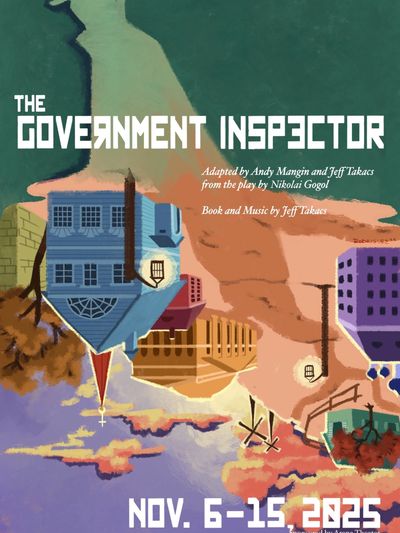
About The Government Inspector
Waste, fraud, abuse, and true love....
The Government Inspector is a new musical comedy based on Nikolai Gogol's classic farce. It completed an initial collegiate run to enthusiastic, sold-out crowds at Wheaton College in November 2025.
This show needs producers, funders, champions, and friends. This page contains production requirements, a musical trailer, a script sample, photos, a video of the college production, and more.
Elevator Pitch
Provincial Russia in the time of the Tsars. Corrupt local bureaucrats mistake a penniless gambler for a government inspector and chaos erupts. A musical farce inspired by Gogol, blending the wit of Gilbert and Sullivan with the warmth of classic American musical storytelling.
Production Details and Requirements
Running time: about 1 hour and 40 minutes.
Casting: 8M, 8F (with room for cross-gender casting, double-casting, and no requirements on age or ethnicity)
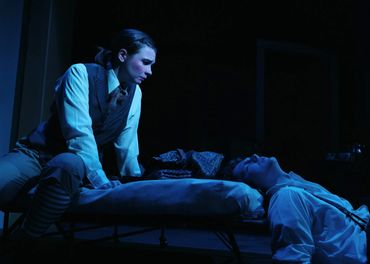
Set: Most of the action takes place in one great room. A brief scene in an Inn may be built separately or accomplished with a small bed and lights.
The musical style. Standard American melody-driven storytelling with a Russian flavor, including melodies derived from folk classics.
Musicians: One piano player minimum. Percussion and bass improves the sound. An accordion and/or strings can bring out the Russian flavor.
FAQs
"How faithful is the play to the original?" About 50%. The characters and basic plot are the same, but we've added two love stories, a wedding, and music.
“Is the play politically or otherwise didactic?” The play is a work of fiction. Any resemblance to events or persons living or dead is a result of your twisted, highly-perceptive imagination.
“Is it melodramatic and mustache-twirling?” Yes!
“Will I tap my toes and remember the songs?” Yes!
“What will the audience say as they leave the theater?” Based on the tryout run of the show, unmarried attendees will marry each other and everyone will join the platinum circle.
About the Writers
Andy Mangin is a writer, director, set designer, and professor at Wheaton College. He founded the successful Wheaton Shakespeare Festival, where he continues to direct. He holds an MFA from Southern Methodist University.
Jeff Takacs is a writer, musician, and actor who has written and performed in many productions by New York's Company XIV. Film and television credits include the Coen Brothers' Inside Llewyn Davis, the Cinemax comedy Girls Guide to Depravity, and more. He holds an MFA from University of California, Irvine. Takacs writes the Houndstooth of Love newsletter.
From an essay written after the first show:
"The characters of Dobchinsky and Maria might be...my favorite characters in the play, and without a doubt my favorite relationship...their relationship is so tied to naming each other, most often after famous lovers in history or books. It is a game they play, not realizing the depth of it until, close to the end, Dobchinsky doesn't participate when Maria names him. That is the moment when Maria realizes something is different, and she doesn't want that to change. Naming gives us permission to love. It is always part of the act of loving someone." - Magnolia Smoak
Contact
Contact Jeff Takacs or Andy Mangin at takacsjeff@gmail.com.
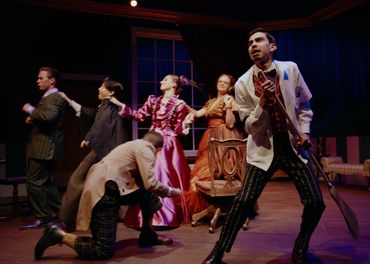
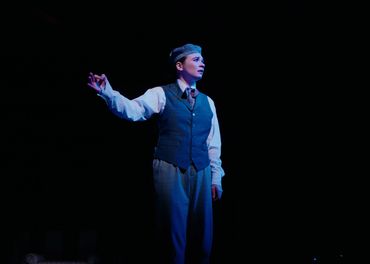
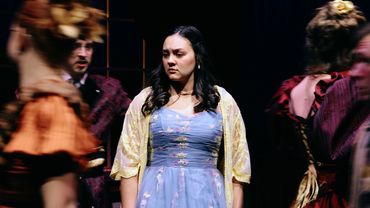
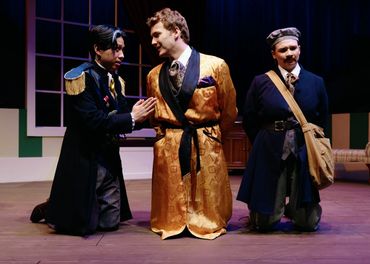
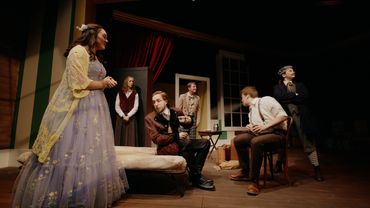
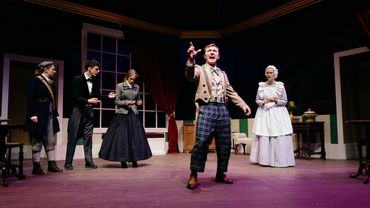
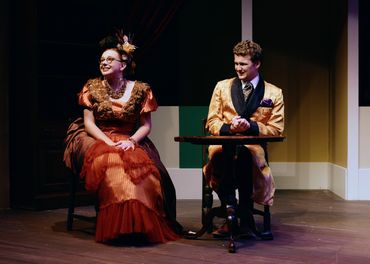
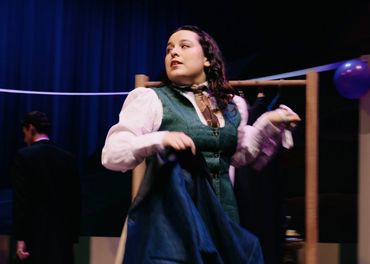
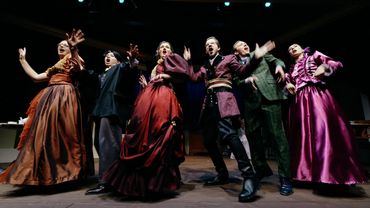
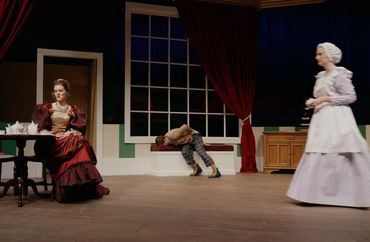
Shots from the Wheaton College production.



Thank you!

Thank you!
The Government Inspector needs producers, funders, champions, and friends. Please get in touch: takacsjeff@gmail.com.